THE VITAL SPACE CORE PROJECT is an ongoing project in progress (2009 – 2012).
Vital Space – Nature | Humanity, is an ongoing project in progress. In its totality it raises questions regarding humanity’s current path and, in particular, the ways in which the great economic meltdown of our times combines with the looming environmental crisis to procure the future’s challenges. Vital Space is a video project to be realised in two parts. Part One addresses Nature while Part Two concerns Humanity. Both consist of two juxtaposed projections thus forming two autonomus yet complemetary video installations.
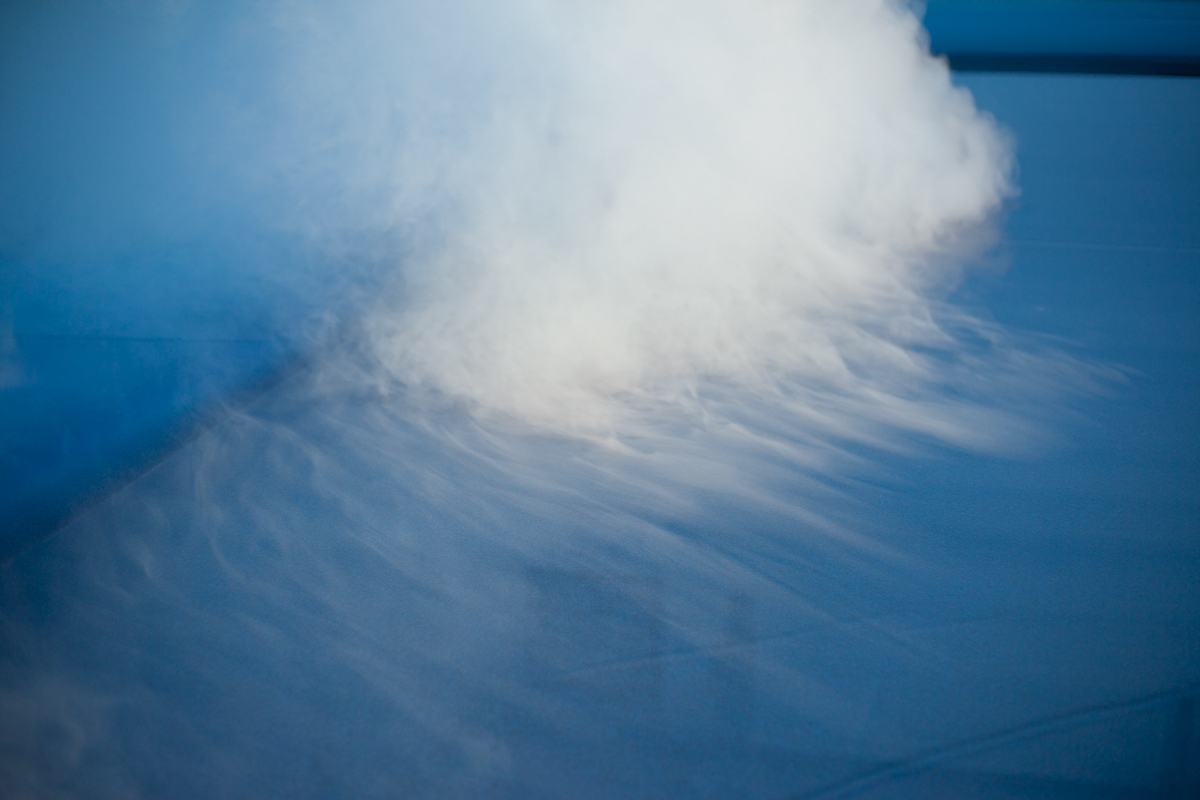
Vital Space – Nature sets humanity’s parametres; it projects images of land and sea depicting our natural limits as a species inhabiting a fragile planet; The filming for Vital Space – Nature will take place in Australia, the oldest and less populated Continent on the planet. A place synonymous with the notion of migration. In this film the presence of humanity is suggested by its absence.
Vital Space – Humanity turns to humanity itself and places in sharp focus the masses that flow into Megacities which cannot, and will not, embrace them. Yet it does all this without hiding the intense beauty of the human condition, even under the most trying of conditions thrown up by the modern urban jungles. The cities included in Vital Space – Humanity are cities such as: Istanbul, Athens, Paris, Cairo, Seoul, Los Angeles, Lagos, Mumbai, Sao Paulo, New Mexico, Shanghai and others.
Site-specific installation, by Danae Stratou. Curated by Alexandra Koroxenidi. Eleusis, Greece, (2017).
Marking the opening of the Aisxylia Festival 2017, the installation is currently being presented at the Old Oil Mill of Eleusis from June 9 to July 30 and August 19 to October 15, 2017.
Upon the Earth Under the Clouds is a large-scale site-specific installation conceived for the Old Mill and the city of Eleusis. Using water and soil as its core materials and ceramic pots as its dominant morphological feature, the work enters into a dialogue with the rich history of Eleusis, from antiquity to the long industrial history of the city and its present-day structure. Woven into its narrative are the myth of Demeter and Persephone, mortality, the notion of voyaging, the existential quest for a destination, and migration, not only as a defining feature of the city’s history but also as a repeated historical occurrence.
CYPRUS: GREEN LINE, KOSOVO: NORTH-SOUTH MITROVICA, N. IRELAND: BELFAST, ETHIOPIA-ERITREA: BADME, WEST BANK, PALESTINE: WALL, INDIAN-PAKISTANI ADMINISTERED KASHMIR: LINE OF CONTROL, MEXICO-USA: BORDER FENCE
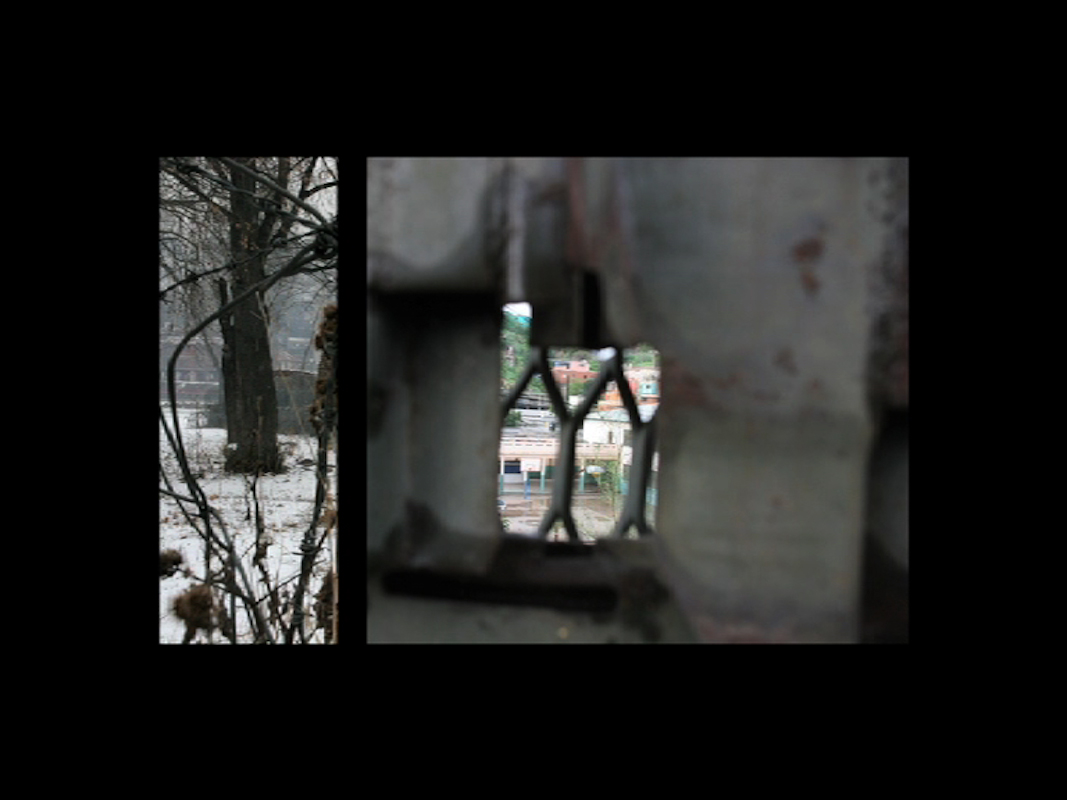
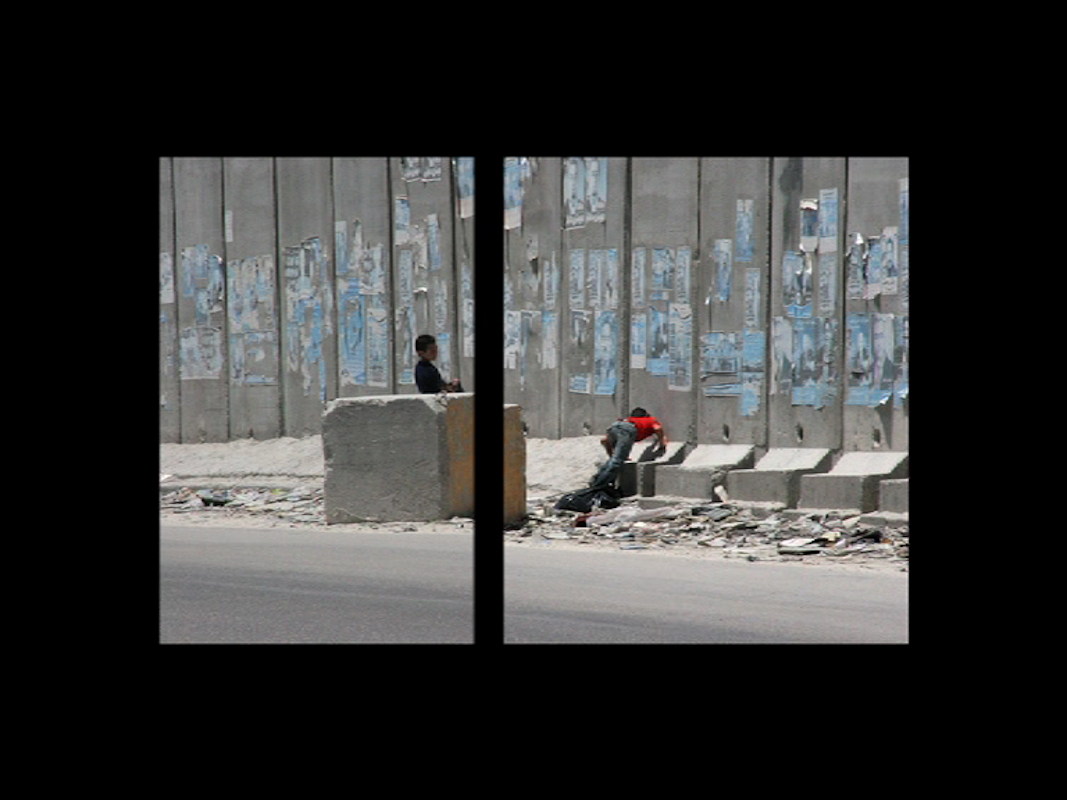
War and prejudice may divide people, but people are the same; and their lives similar on both sides of the dividing line. And yet, the Cut keeps deepening as the Walls keep rising, and globalising, in an era that promised to erase them. Seven open wounds. Seven lines on the planet where political, economic, nationalist or religious tension has long ago shaped impenetrable divisions. Some constitute natural landmarks that humans have appropriated as dividers; others are utterly artificial. A few coincide with ill-defined state borders, usually ceasefire lines. All of them are founded on unresolved issues and relentless claims. They procure fluidity, uncertainty, death. Around them, however, the desire abounds for a normal life… I travelled and stood in those places, capturing on photographic stills the two sides of each division. I flew, drove and walked for 60,000 km. I wandered and talked to the people who live in these grey zones, in the ‘no man’s lands’. From the resulting 15,000 photographs, I chose 14 (7 pairs). I set them up, each opposite its pair, creating in this manner a visual walkway; a path through these binary oppositions which tracks the aspiration to heal; to bridge; to let the mind’s eye fill in the chasm.
Danae Stratou
CUT – 7 dividing lines has been presented in the following exhibitions:
2010 Politics of Art, National Museum of Contemporary Art. Curator Dr. Anna Kafetsi. Athens. Greece.
2008 Transexperiences – Greece 2008, 798 Space, Beijing, China. National Museum of Contemporary Art. Curator Dr. Anna Kafetsi.
2007 CUT – 7 dividing lines, Solo Exhibition, Zoumboulakis Galleries, Athens, Greece. Bare Life, Museum on the Seam, Jerusalem, Israel. Curator Raphie Etgar. Grey, Rethymnon, Greece. Curator Maria Marangou. 1st Thessaloniki Biennale, Thessaloniki, Greece. Curator Maria Tsantsanoglou. CUT- 7 dividing lines belongs to the following collections:
– The Emfietzoglou Collection, were it is on the permanent exhibition, (Athens – Greece)
– The National Museum of Contemporary Art, (Athens – Greece)
A project by Danae Stratou in collaboration with Vasilis Kountouris (2012)
Video & Sound Installation
ICESONGS2 comprises a video & sound work which emerged from the site-specific installation ICESONGS created by Danae Stratou and presented at La Verriere, the exhibition space of the Fondation d’ Enterprise Hermes, in Brussels in 2010.
The most powerful element of the project was the astounding soundscape which had generated from sounds coming directly from the Antarctic Ocean emitted by the icebergs as they form on Antarctica’s edges, they collide against each other, squeeze out into the open sea, sail away and finally melt. These sounds, captured by water microphones1 that are lying on the seabed of the Antarctic, are now used by researchers for monitoring Antarctica’s melting ice shelf. Dr Alexander Gavrilov2 and Dr Jason Gedamke3 were kind enough to 4convert a large number of samples from their recordings, on my behalf, of the shifting icebergs’ sounds and to share them with me for the purpose of this project.
The final composition of ICESONGS, kept intact in ICESONGS2, is a 20’ minute long soundscape comprising 7 “sound-waves”. These have been synthesised by transforming and fluctuating the speed of 7 of the original – specially converted – recordings so that they vary in pitch and timbre and in this way reflect the rich range and diverse qualities of the sounds produced by the travelling, braking, colliding and melting of the icebergs.
These Iceberg’s songs coming from deep within the Antarctic Ocean are like voices coming out of an imagined landscape, at once familiar and alien, so powerful that they compelled me to attempt, in collaboration with sound and multimedia specialist, Vasilis Kountouris, to create a visual imagery that could potentially accompany the soundscape and thus form a new autonomous work. The result of this collaboration is the video/sound work ICESONGS2. .
1Directional water microphones lying on the seabed in a defunct US naval base in South Australia. They used to be part of a massive US monitoring network whose aim was to track the paths of Soviet nuclear submarines as they crisscrossed the South Pacific. 2Centre for Marine Science and Technology, Curtin University of Technology 3Marine Mammal Research Program, Australian Antarctic Division 4 by speeding up the original sounds by ten times so that they transmit within the acoustic range of the human ear
ICESONGS2 belongs to the permanent colllection of the National Museum of Contemporary Art (EMST) in Athens, Greece. It was exhibited at the exhibition: SonicTime speech/sound/silence – From the EMST collection (May -September 2012)
An installation by Danae Stratou, 2010. La Verrière, Fondation d’enterprise Hermès, (Brussels – Belgium). Curated by Alice Morgaine.
Danae Stratou presented the site-specific installation ICESONGS at the exhibition space of the Fondation d’enterprise Hermès ‘La Verriere’, in Brussels. The project was commissioned by the foundation and curated by Alice Morgaine.
Upon entering the space, a primal songlike sound attacks the senses. At first it resembles electronic music; or some mysterious voice, like that of whales. It is the sound of icebergs edges, as they move, break, melt or collide against each other. A square, shallow water tank, located centrally in the space, is fully filled. The whole floor resembles an abstract image, a dark blue square gradually transforming into a bright white, as it reaches the room’s edges. The image is produced from an enlarged satellite image of a random location in Antarctica. The sound is recorded with the use of Cold War technology (super-microphones that used to track nuclear submarines in the South Pacific), so that it enables us to eavesdrop from thousands of miles away as icebergs break off Antarctica’s ice shelf.
An imagined landscape, at once familiar and alien, forges an opportunity to re-visit a vista of the mind where a pre-existing connection between our own Body, Mind and Nature is re-energised.
*Dr Alexander Gavrilov and **Dr Jason Gedamke were kind enough to put together and send to me, many hours of recordings (samples used from 2003 – 2006), of the shifting icebergs’ sounds. These sounds coming directly from the Antarctic Ocean are used to compose the soundscape of the “ICESONGS” installation.*Centre for Marine Science and Technology, Curtin University of Technology
**Marine Mammal Research Program, Australian Antarctic Division
A project by Danae Stratou. Istanbul Cultural Capital of Europe 2010
A first version of Vital Space – Humanity was presented in Istanbul in 10 & 11 / 2010 at Tophane. This video installation has been Danae Stratou’s participation in the project Lives and Works in Istanbul, part of the central program of the Istanbul – Cultural Capital of Europe 2010 events. Danae Stratou was invited to participate by the Visual Arts Director, Beral Madra. Other artists who participated in the project are: Victor Burgin, Sophie Calle, Antoni Muntadas, Peter Kögler and Remo Salvadori. The shooting in Istanbul took place in April & May 2010, during Danae Stratou’s and her collaborators’ stay in the city.
THE CONCEPT
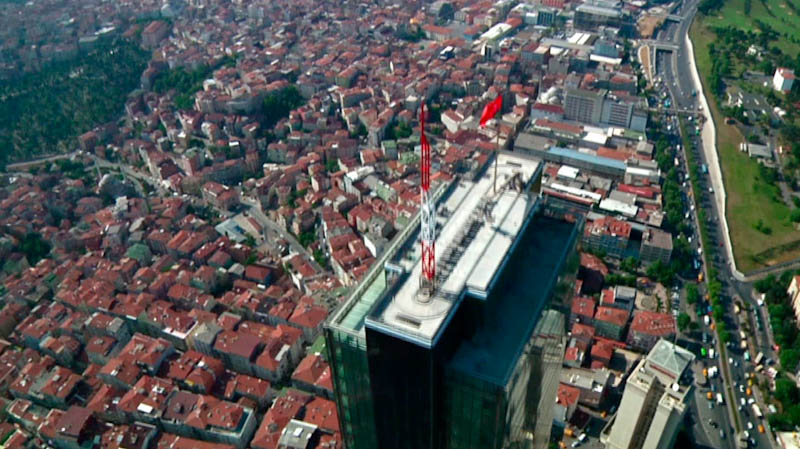
Vital Space – Istanbul is a video project comprising two films from the city of Istanbul. One film offers a bird eye’s view of different paths connecting order and disorder, centre and suburb, privilege and dispossession, formal and informal. The second film captures from ground level a sea of people coming toward the camera in sequences filmed in different city locations (e.g. bus station, ferry boat terminal, busy streets).
Part of the footage filmed for Vital Space – Istanbul will eventually become integrated within the wider project Vital Space – Humanity. The additional cities to be included in the broader project are: Athens, Paris, Seoul, Los Angeles, Lagos, Mumbai and Sao Paulo.
The project is a response to the challenges posed by Globalisation and its discontents; by the plight of the environment; by the ebb and flow of massive migration movements. The project focuses on the contrast between, on the one hand, vast, empty, fragile, uninhabited spaces and, on the other, overpopulated, highly contested, urban environments. A momentous urban expansion is spawning the planet’s largest cities, as wave upon wave of migrants abandon the countryside and the periphery. Meanwhile, the surrounding economic wastelands are emptied of people and left in a state of ecological fragility.
THE INSTALLATION
Vital Space – Istanbul was projected on a large freestanding wall (7.00mx4.00m). Both projections covered the entire surface of the wall on each side. On the one side of the wall the birds’ eye view film was projected. On the other side, the ground level film was projected. The former offers the viewer a constant outward movement, as the camera attached to the front of the helicopter relates a constant flow of images taking the viewer seamlessly across the city from the centre outwards. In contrast the ground level film offers a different dynamic since the camera is static and the constant flow of humanity is coming toward the viewer.
Greece, Europe and indeed the World are experiencing a period of multiple crises – economic, social, political, environmental. IT’S TIME TO OPEN THE BLACK BOXES! Is a participatory art project initiated by artist Danae Stratou. Living in Greece in this time of multiple crises, it is quite easy to fall into a state of fear-induced paralysis. As a reaction to this the artist resolved to act by means of an art project. Her hope was for this artwork to reflect and to ease Athens’ anxious struggle to carry on. Distanced from traditional commercial practices, it aspired to undercut its own costs, to give voice and to assist materially as many as people possible, to help attain a deeper understanding of our collective predicament, to empower a joint response to the paralysis that is causing us to “frieze up”. The project targets at activating a dialogue that will induce us to react in a collective manner. By opening the “Black Boxes”we symbolically bring to light the words which reflect, what we are in danger of losing and need to rescue, or what threatens us today.
Installation description
The installation comprises 100 black boxes geometrically positioned on the floor. *The boxes were custom made out of thick black aluminium sheet metal. They are positioned on the floor equidistant from another, so as to form a rectangular grid covering an area of 100m2 situated at the centre of the gallery. The boxes’ lids are open at an angle. Inside each box a black screen is positioned at a 450 degree angle in relation to the floor. The boxes are surfaced with translucent mirrors, thus creating the illusion that they are filled to the rim with a liquid substance and that the screens within them are submerged in polluted water akin to an oil slick.
Upon entering the exhibition space the viewer is confronted by a mixture of sounds such as beeps, heart beats, explosions and flat-lines. As one approaches and walks through the installation it becomes apparent that the screens inside the boxes are displaying words and numbers. Each word appears for a few seconds before being replaced by either a countdown or a count-up (depending on the word). As the numbers race (down toward zero or up to a specially chosen limit), their pace, style and accompanying sounds resemble a ticking bomb. When the countdown, or count-up, reaches its climax, each box emits the sound of either an explosion or a flat-line. These sounds are designed so as to intensify the sensation of tension, crisis, and alarm.
*The boxes were designed by the artist and were produced with the support of ELVAL, one of Greece’s leading aluminium companies.
Open call | Participatory angle | Touring
The project was inaugurated in Athens, Greece in April 2012. Through the use of a Vital Space blog, social media and other means, a wide range of people were invited to contribute to the project by submitting the one word that best expresses A) what frightens or threatens them the most, or B) what they believe is in urgent need of protection. The artist reviewed the nearly 1,000 submissions and chose 100 of them to be included in an installation comprising 100 black boxes.
Danae Stratou now aims at presenting this installation Internationally. The open call cycle will be re-activated each time the project is to travel in a new city for a period of 1-3 months prior to each exhibition. Through the Vital Space blog, a wide range of social media and conventional local media local communities will be invited to participate (by sending a word each). In this way the Black Boxes, when opened in a different city, will reveal local concerns, hopes and fears in a manner which, nevertheless, bind the different cities together. Thus the project will be constantly in flux in ways that reflect the think-global/act-local adage.
Social Engagement | Non Profit Organisations
The project is based on a collaboration with a limited number of local Non Profit Organisations active in their local communities, supporting their most vulnerable citizens, and/or raising awareness regarding climate change, encouraging environmentally conscious practices etc. This collaboration will take place in each of the cities were the project will travel to and will operate at two levels:
A) The NGOs will disseminate knowledge concerning the project’s financial, social and ecological aspects and will communicate the Open Call through their own network. This will help reach a wider range of people from diverse parts of the community so as to encourage them to participate by offering their one-word-person.
B) Vital Space will support financially these non-profit organisation’s by offering them 10% percent of the exhibitions’revenues.
Public Dialogue | Raising Awareness
Recent shocks like the financial and debt crises have made civil society more politically engaged, the eruption of protest movements and the ongoing political, economic and social crises in Europe and Internationally, have changed our thinking about the “political.” The Black Boxes reflect critically these social shifts by opening a public dialogue that examines the tension between art as art and art opening up onto social and political life.
The Black Boxes transmit a call for a visionary intervention in a time of crisis that examines how art in conjunction with new technologies can open the public dialogue by promoting direct, sophisticated and advanced democratic models and practices.
The project investigates the space between art, democracy and political action by focusing on how society responds directly (without parliamentary representation) to issues that affect them the most, through the medium of art. The Black Boxes monitor the public opinion without intermediaries, as a form of liberation of the public’s muted voices.
In relation to the exhibition of the Black Boxes in Athens Vital Space organized an open discussion which took place at the Gallery during the time of exhibition. The event was conducted with the participation of speakers from different scientific fields, the artist and the public – focusing on the issues that this art project deals with. This open discourse covered various topics and points of view, not only on the artistic area, but also on matters of everyday reality and awareness of our personal and global concerns. A similar event – open discussion/seminar/conference – will be organized in each city along with the presentation of the exhibition. Such an event should give an excellent opportunity to participants of local institutions/universities to express their own thoughts on these important contemporary issues and provoke the active participation of the public.
The River of Life is a video installation comprising seven 30’ films simultaneously projected in a specially constructed circular space.
It was created for and presented at the international exhibition TRANSCULTURES (National Museum of Contemporary Art, Athens, Greece), during the Athens 2004 Olympic Games. Curated by Anna Kafetsi.
A river generates life in the land it travels through…
Looking at satellite images of the Earth’s rivers, one has the impression of looking at the planet’s veins, the living veins of the Earth.
Travelling on a riverboat for a few days, you would slowly start to feel that you were tapping into the rhythm of its flow; a flow that is natural as breath and traverses via the river the Earth entire.
You would have the notion of travelling through this current that unites the world, and that you too are connected to this universal rhythm.
Seven major terrestrial rivers: the Danube, the Nile, the Amazon, the Mississippi, the Niger, the Yangtze and the Ganges.
A fluctuating inventory of the world. A glance, through which the entire world unfolds and wherein the image transforms: from place to place, from summer to winter, from culture to culture, from East to West, from night to day, from jungle to city, to desert…
A boundless moment, a moment which carries a timeless, eternal rhythm; the rhythm of the river, the rhythm which unifies the whole world and which bears along in its flow, all of humanity.
It is the rhythm of life – and its sound is the sound of the planet’s breathing.
I travelled for ten months following the flow of these seven major rivers of the world and dedicated about two years to the completion of The River of Life. It was an experience that enriched and deepened my awareness of the world that surrounds me and of my own position within it.
A Video Installation by Danae Stratou, 2012 | Based on a Text by Yanis Varoufakis
CYPRUS: GREEN LINE | KOSOVO: NORTH – SOUTH MITROVICA |N. IRELAND: BELFAST | WEST BANK: PALESTINE | MEXICO – USA: BORDER FENCE
Walls have a longstanding relation both with liberty from fear and subjugation to another’s will. After 1945, walls acquired an unprecedented determination to divide.
They spread like a bushfire from Berlin to Palestine, from the tablelands of Kashmir to the villages of Cyprus, from the Korean peninsula to the streets of Belfast. When the Cold War ended, we were told to expect their dismantling. Instead, they are growing taller, more impenetrable, longer. They leap from one continent onto the next. They are globalising. From the West Bank to Kosovo, from the gated communities of Egypt to those of California, from the killing fields of old Ethiopia to the US-Mexico borders, a seamless wall is meandering its way, both physically and emotionally, on the planet’s surface. Its spectre is upon us.
Yanis Varoufakis
The video installation was presented at the International Visual Arts Program (2010): The Adelaide Festival. Exhibition: RESTLESS – Adelaide International 2012, (Australia). Curated by Victoria Lynn.